

Mon & Sun Closed · Tue–Fri 09:30–17:00 · Sat 09:00–13:00
If your child is becoming short-sighted, it is worth looking beyond simply changing their glasses every time their prescription increases.
At Heaney Opticians, we offer myopia management for children and young people aged 7 to 18. Our approach combines regular eye care with practical lifestyle advice and myopia management lenses where appropriate.
The aim is to monitor how your child’s myopia is developing and, where clinically suitable, use available options to help slow its progression.
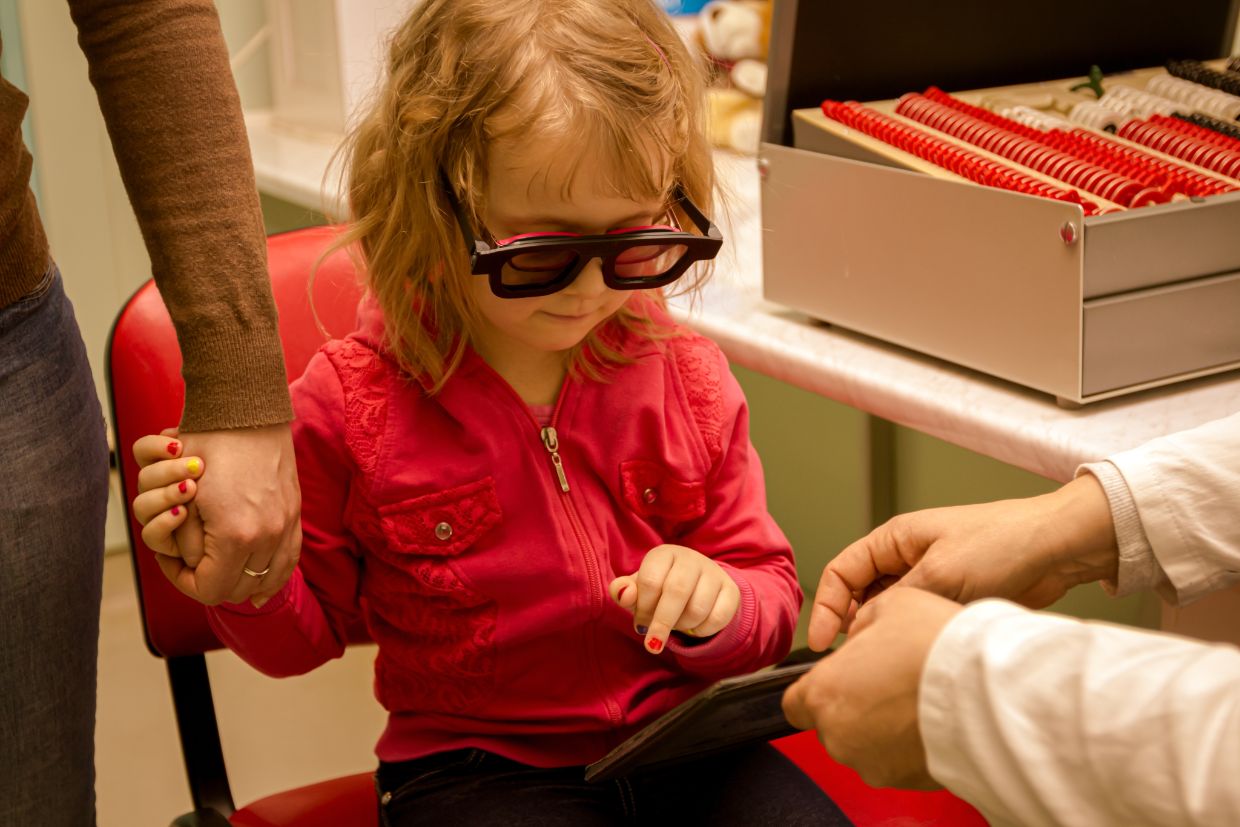

Myopia, also known as short-sightedness, means that distant objects can appear blurred while things closer to the child may be easier to see.
It commonly develops during childhood and can become stronger as the eyes grow. Some children have a higher risk of developing myopia, including those with a family history of short-sightedness and children who spend limited time outdoors.
A stronger level of myopia is associated with a greater risk of certain eye conditions later in life, including retinal detachment, glaucoma, cataract and myopic retinal degeneration. The overall risk in the general population remains low, but it increases as the degree of myopia increases.
This is why we talk to parents about myopia as something that is worth managing, rather than simply correcting the child’s vision with ordinary single-vision glasses.
Myopia management cannot guarantee that a child will not become more short-sighted or develop a future eye condition. The purpose is to take sensible, evidence-based steps to reduce the rate of progression where possible. Current guidance confirms that myopia management treatments can slow progression, although they cannot completely prevent it.

We typically see children and young people between the ages of 7 and 18 for myopia management.
This is an important period because myopia often develops and progresses during childhood and the teenage years. Regular examinations allow us to monitor changes and discuss whether management is appropriate.
Every child is different. We look at their prescription, age, visual needs and how their myopia is changing before discussing the options with their parents.

Where appropriate, we can provide myopia management lenses designed specifically for children with myopia.
These are different from standard single-vision spectacle lenses. They are designed not only to correct the child’s distance vision but also to help slow the progression of myopia.
There is evidence that specially designed myopia management spectacle lenses can slow myopia progression in children.
We will explain how the lenses work, what can reasonably be expected from them and whether they are suitable for your child.
Myopia management is not only about the lenses your child wears. We give lifestyle advice to all children, including practical guidance around screen use and spending more time outdoors.
Regular outdoor time is an important part of looking after children’s developing vision. There is good evidence that spending more time outdoors can help delay or prevent the onset of myopia, particularly in children who are at higher risk.
This does not mean children need to stop reading, doing homework or using screens. It is about getting a sensible balance between close-up activities and time outside.
Long periods of close-up work, including reading and screen use, may be associated with myopia development and progression, although the evidence around near work is less clear than the evidence for outdoor time. Current guidance recommends regular breaks during prolonged screen use and close work.
We can talk to parents and children about simple changes that fit into their normal school and home routines.
Myopia management is an ongoing process rather than a one-off appointment.
Regular eye examinations allow us to keep track of your child’s prescription and how their myopia is changing. We can then discuss whether their current approach remains appropriate or whether anything needs to change.
Optometry Ireland recommends that parents are given clear information about the expected outcomes, benefits and risks of different myopia management approaches.
We will always explain our recommendations clearly so that you can make an informed decision about your child’s care.


There is no single solution that suits every child with myopia.
Some children may benefit from myopia management lenses alongside lifestyle advice. For others, the most appropriate approach may be different.
Our role is to assess your child’s individual circumstances, explain the available options and help you understand what each approach involves.
We do not promise that a particular treatment will stop myopia progressing. Instead, we focus on what can realistically be done to manage it and monitor your child’s eyes as they grow.
We typically see children from around 7 years old through to 18 for myopia management. The right approach depends on the individual child, their prescription and how their myopia is developing.
No. Current evidence shows that myopia-management approaches can slow progression, but there is no treatment that guarantees myopia will stop progressing completely.
Not every child will need the same approach. Where clinically appropriate, we can discuss myopia management spectacle lenses alongside lifestyle measures and regular monitoring.
The relationship between near work and myopia is complex. Long periods of close-up work and screen use may play a role, but the evidence is not strong enough to say that screens alone cause myopia. We recommend sensible breaks from close work and making sure children spend plenty of time outdoors.
Spending more time outdoors is associated with a lower risk of developing myopia, so we encourage children to have regular outdoor time as part of their normal routine.
Higher levels of myopia are associated with an increased risk of conditions such as retinal detachment, glaucoma, cataract and myopic retinal degeneration later in life. Managing myopia during childhood aims to reduce the amount of progression and, in turn, may help reduce the risks associated with higher levels of myopia.
The main aim is to slow the progression of myopia rather than reverse it. Your child’s myopia may still change, which is why regular monitoring is important.
The appropriate review interval depends on your child’s individual circumstances and the management approach being used. We will advise you when your child’s next appointment is due.
If your child’s prescription has been increasing, or you are concerned that they may be developing myopia, talk to Heaney Opticians.
We can assess their eyes, discuss their risk factors and explain the myopia management options available for their age and individual needs.